[English below]
Cierra los ojos. Ve al pasado. Hasta el siglo IX… y te sitúas en mitad de una jungla en lo que hoy conocemos como Camboya.
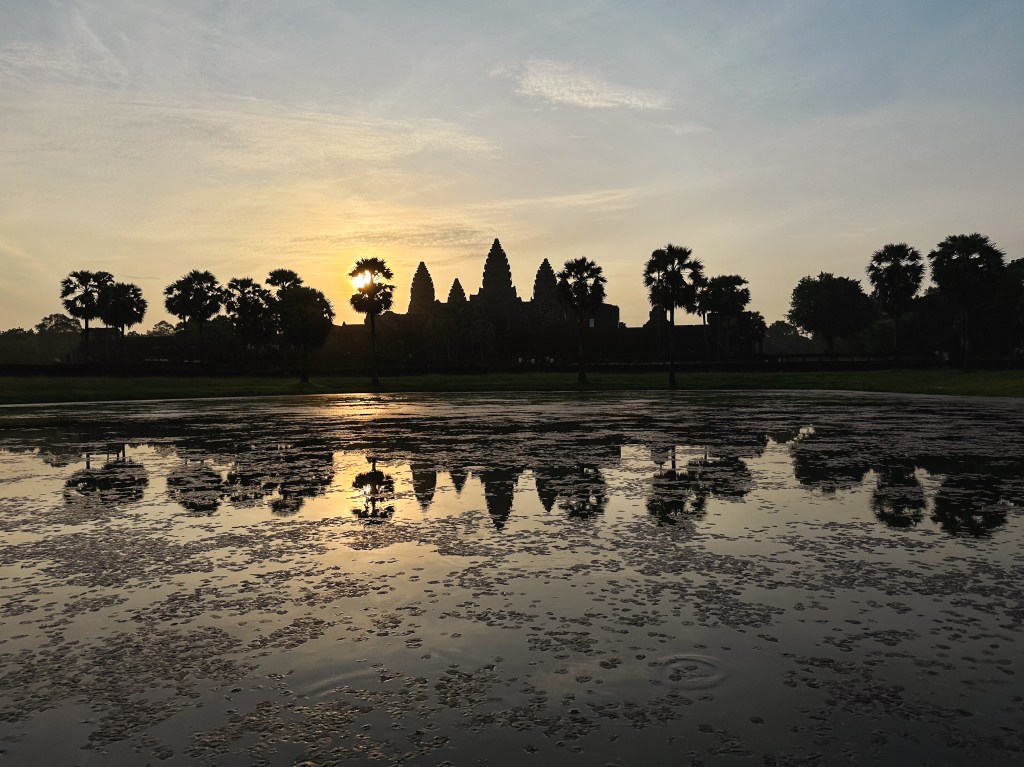
¿Qué sucede? Estás en una selva, la humedad es del 90% y la temperatura al amanecer a las 5:30 es de 29 grados. Vas caminando y cruzas un pequeño lago. Intuyes lo que vas a ver a continuación porque has visto imágenes. Sigues caminando rodeado de mosquitos y los sonidos de los pájaros. Ni la manga larga ni el repelente ahuyenta a los pequeños chupa sangre. Cruzas una puerta que forma parte de un complejo arquitectónico más grande y entras en una gran explanada. Sigues caminando por un un ancho empedrado y justo cuando levantas la mirada, ahí está: la mayor construcción religiosa jamás construida en el mundo, Angkor Wat.
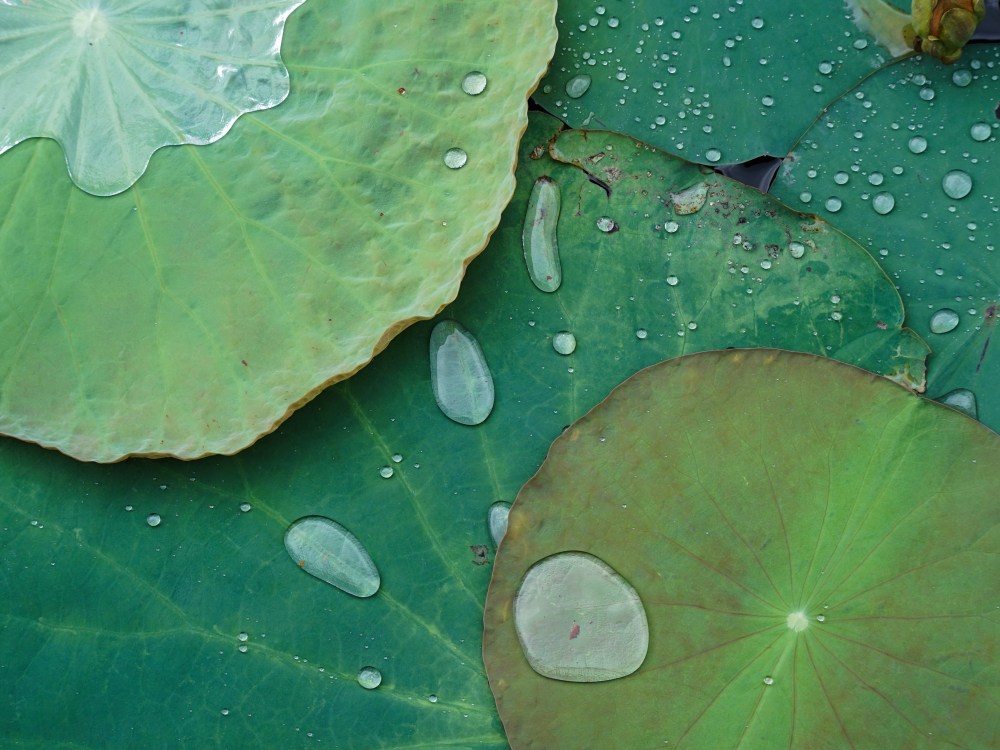
A los lados de ese empedrado hay dos lagos y los visitantes nos situamos en el de la derecha, para ver la salida del sol justo por detrás de las 5 torres del conocido templo. Los colores, la simbología de las torres con las puntas de una flor de loto, los reflejos en el lago y la historia de este lugar, hacen que el amanecer sea un momento mágico.
¿Sentirían lo mismo los habitantes que lo vieron nacer?
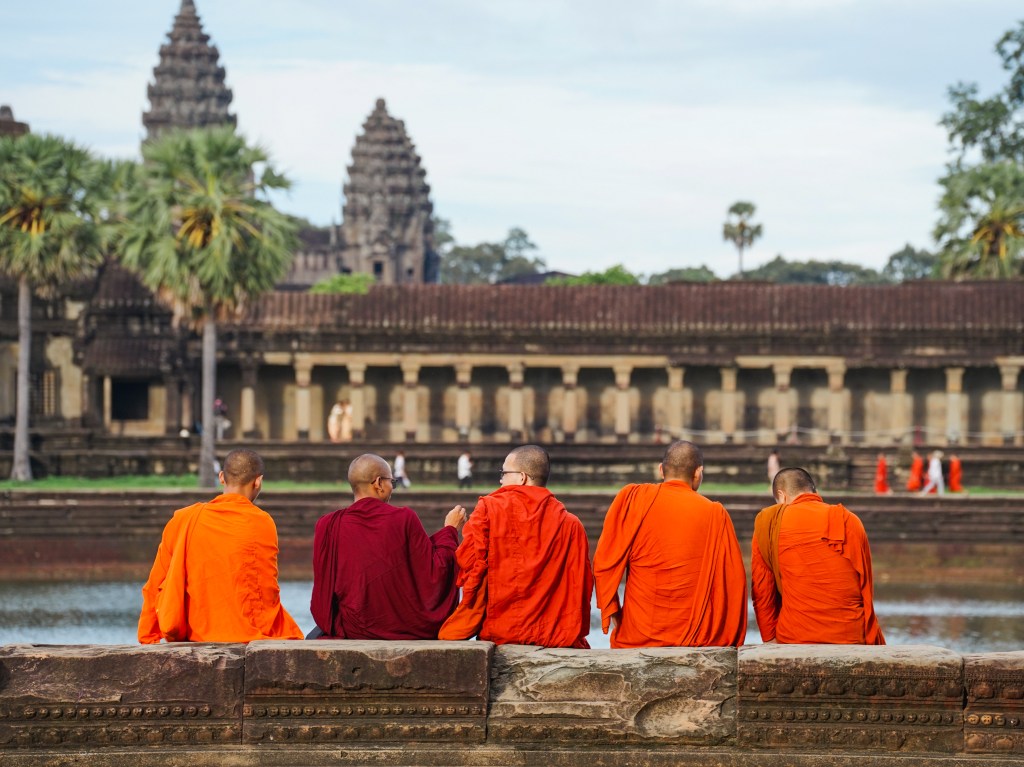
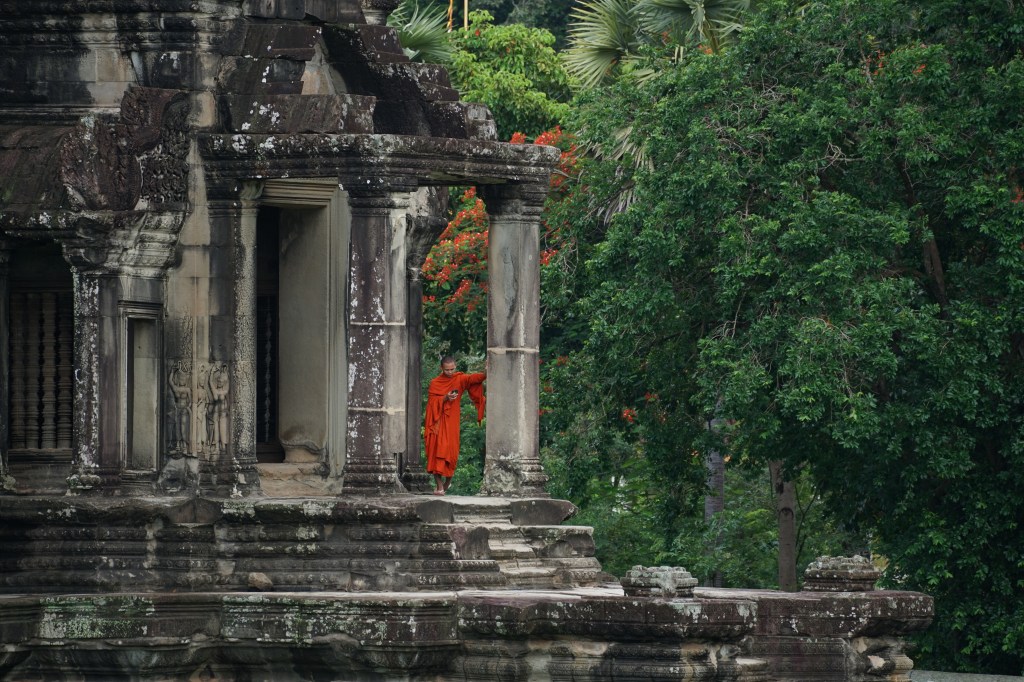
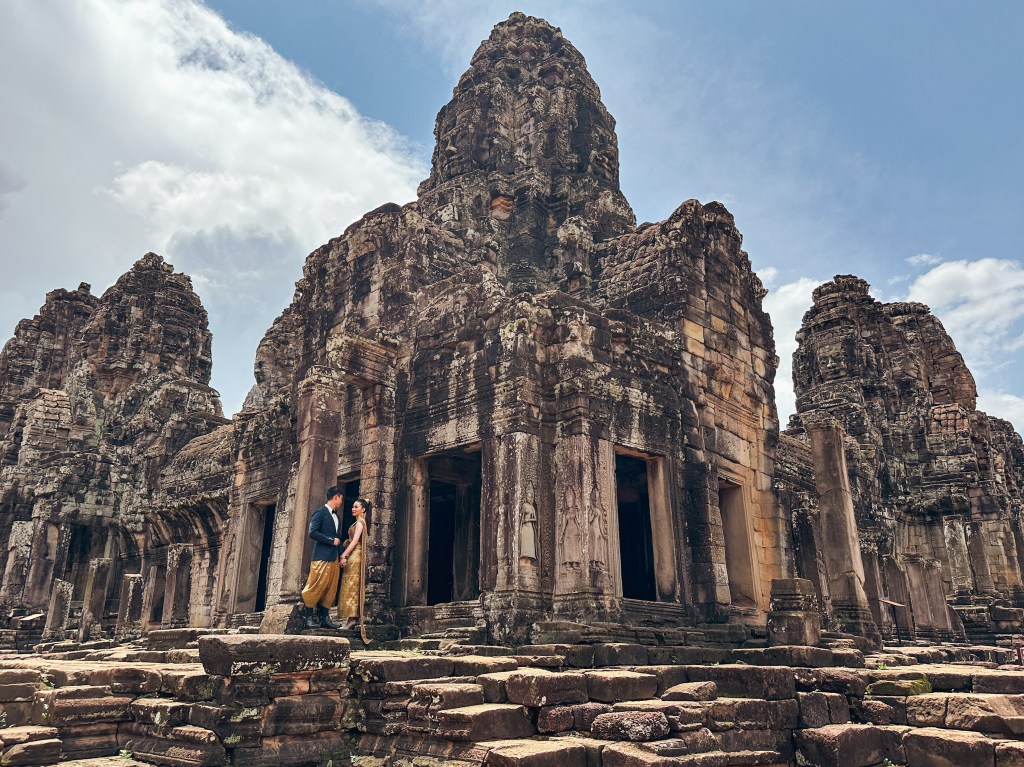
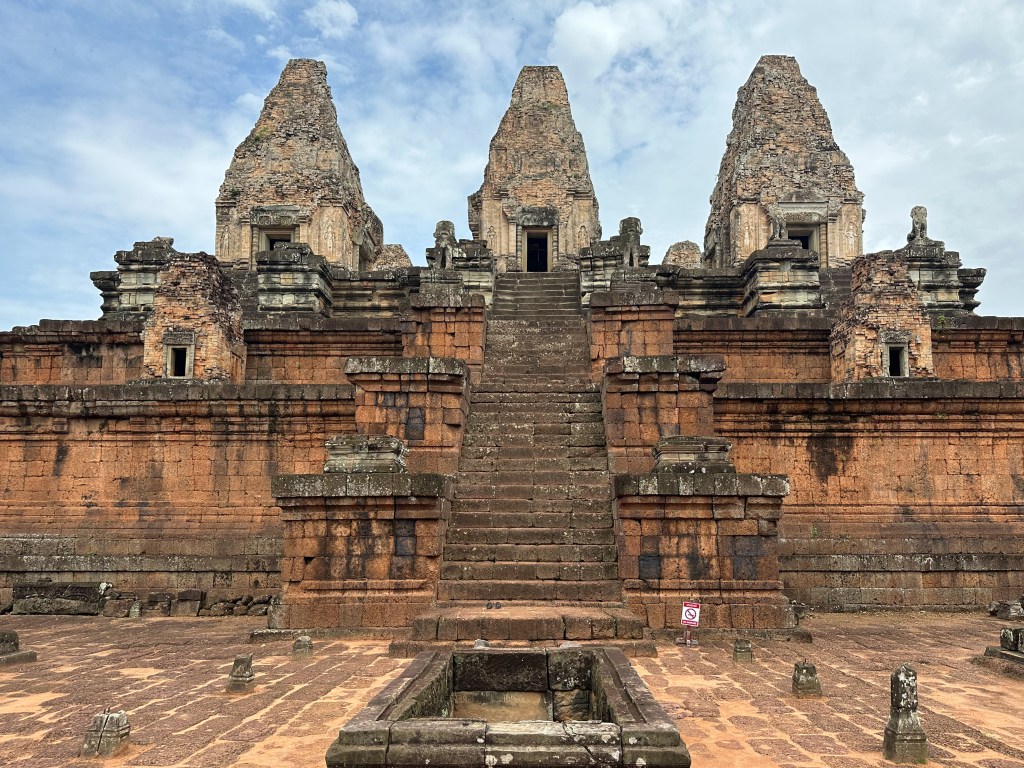
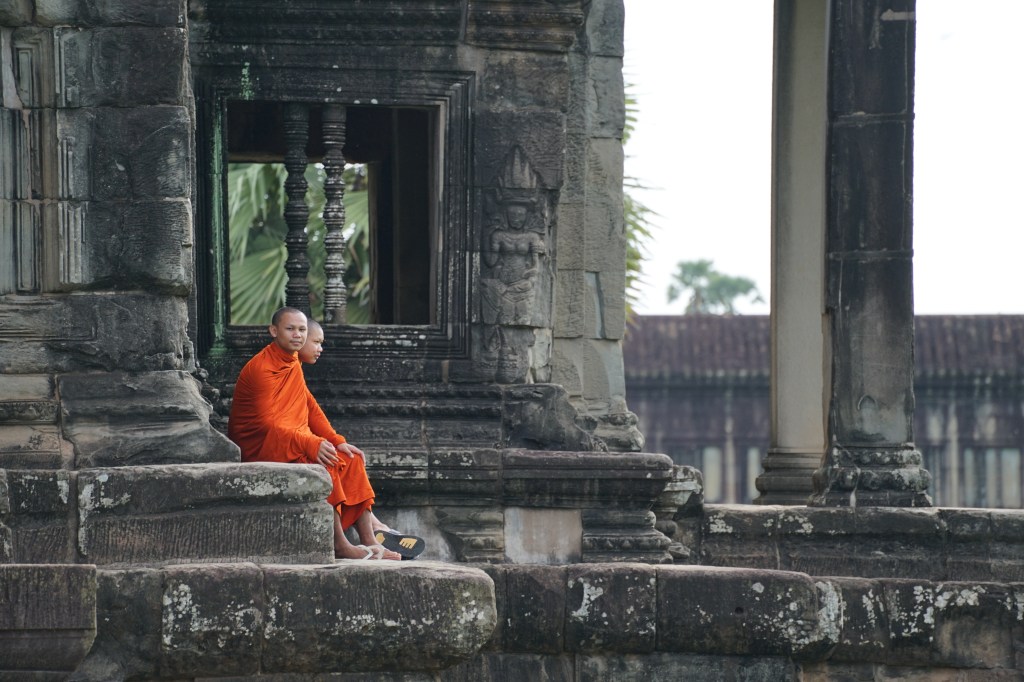
Angkor fue construido entre los siglos IX y XV por el imperio Jemer. Primero fueron templos budistas y después pasaron a ser hinduistas, momento en el cual se arrancaron budas de los doseles y se decapitaron muchas figuras.
Este centenar de templos fueron abandonados por motivos que aun hoy se desconocen aunque hay teorías sobre problemas con los canales de agua. Según esto, en una ciudad donde llegaron a habitar hasta un millón de personas, la falta de agua habría sido determinante para que se abandonara la zona de la noche a la mañana.
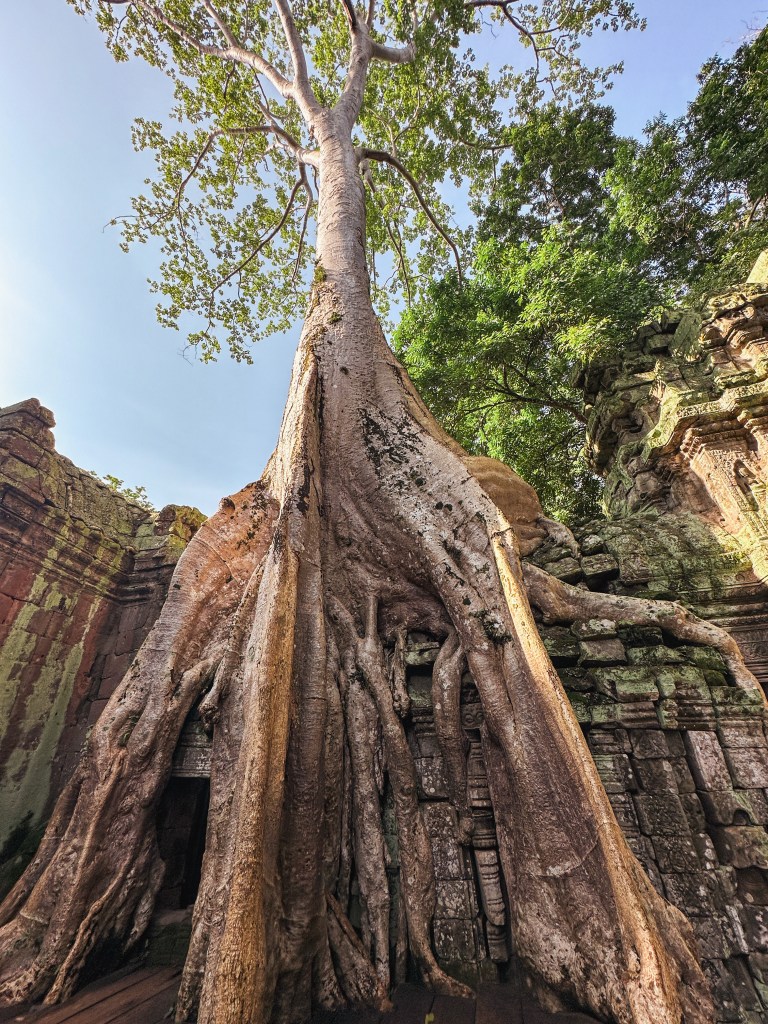
Cerca de 5 siglos después, un francés que estaba cazando mariposas con su equipo, redescubrió Angkor (Henri Mouhot ,1860). Como ya pasó durante la pandemia, cuando un lugar deja de ser habitado por el ser humano, la naturaleza se abre camino. Y por eso Angkor estaba en mitad de la selva de Camboya, donde incluso los árboles han luchado el terreno con los templos durante los últimos 300 años.
Por todo esto, he auto-denominado los templos de Angkor como la octava maravilla del mundo. Y punto.
Recomendaciones para visitar Angkor:
- Mínimo 2 días. Si puedes 3, mejor. Las entradas las compras ahí mismo.
- Alójate en Siem Reap y ojalá te quedes 1 día extra por la ciudad. Tiene muy buen rollo.
- Para recorrerlo, el tuk tuk es una buena opción. Negocia el precio para cada uno de los días ya que puede variar en función de lo que recorras o si ves el amanecer.
- Los precios de la comida son más elevados dentro de Angkor, pero llevarte tu propia comida tampoco lo recomiendo.
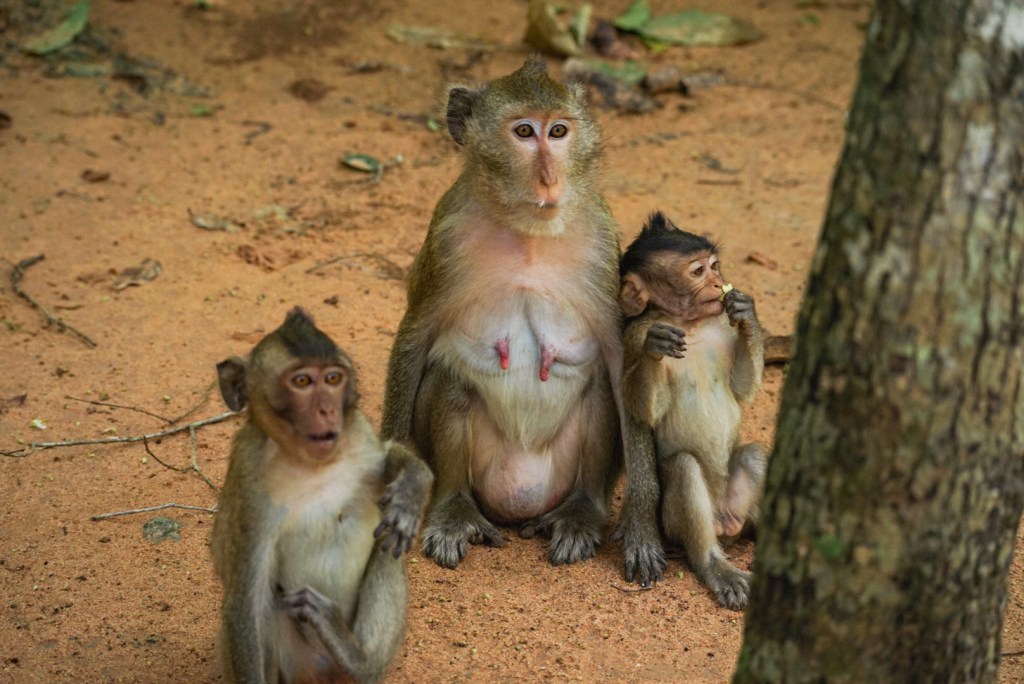
- Cuidado con los monos. Son graciosos hasta que uno intenta subirse al tuk tuk o te persigue. No les des de comer.
- Amanecer en Angkor Wat: tenía mis dudas, pero si está despejado merece la pena. (Protégete de los mosquitos).
- Organízate para ver un atardecer en el templo Phnom Bakheng.
- Si es época de lluvias, llévate un chubasquero. Aunque como la temperatura es tan alta si te mojas no pasa nada, las lluvias son muy intensas.
Más fotos o info en Instagram.
[English]
Angkor, the eighth wonder of the world
Close your eyes. Go back in time. Back to the 9th century… and you find yourself in the middle of a jungle in what we know today as Cambodia.
What’s going on? You are in a jungle, the humidity is 90% and the temperature at sunrise at 5:30 am is 29 degrees. You’re walking along and you cross a small lake. You sense what you are going to see next because you have seen pictures. You keep walking surrounded by mosquitoes and the sounds of birds. Neither the long sleeves nor the repellent repels the little bloodsuckers. You pass through a gate that is part of a larger architectural complex and enter a large esplanade. You keep walking along a wide cobblestone path and just as you look up, there it is: the largest religious building ever built in the world, Angkor Wat.
There are two lakes on either side of the pavement, and visitors stand in the one on the right to see the sunrise just behind the five towers of the famous temple. The colours, the symbolism of the towers with the tips of a lotus flower, the reflections in the lake and the history of this place, make the sunrise a magical moment.
Would the people who saw its birth feel the same way?
Angkor was built between the 9th and 15th centuries by the Khmer empire. They were first Buddhist temples and then became Hindu, at which point Buddhas were torn from the canopies and many figures were beheaded.
This hundred or so temples were abandoned for reasons that are still unknown today, although there are theories about problems with the water channels. According to this, in a city inhabited by up to a million people, the lack of water would have been a determining factor in the overnight abandonment of the area.
Nearly 5 centuries later, a Frenchman hunting butterflies with his team rediscovered Angkor (Henri Mouhot, 1860). As it happened during the pandemic, when a place ceases to be inhabited by humans, nature makes its way. And that’s why Angkor was in the middle of the Cambodian jungle, where even the trees have been fighting for ground with the temples for the last 300 years.
For all this, I have self-designated the temples of Angkor as the eighth wonder of the world. Full stop.
Recommendations for your visit in Angkor:
- Minimum 2 days. If you can get 3, all the better. You can buy the tickets there.
- Stay in Siem Reap and hopefully stay an extra day in the city. It has a great vibe.
- To get around, the tuk tuk is a good option. Negotiate the price for each day as it can vary depending on how far you go or if you see the sunrise.
- Food prices are higher inside Angkor, but I don’t recommend taking your own food.
- Watch out for monkeys. They are funny until one tries to get on the tuk tuk or chases you. Don’t feed them.
- Sunrise at Angkor Wat: I had my doubts, but if it’s clear it’s worth it. (protect yourself from mosquitoes).
- Arrange to see a sunset at Phnom Bakheng temple.
- If it’s the rainy season, take a raincoat. Although the temperature is so high that it’s fine if you get wet, the rains are very heavy.
More photos or info on Instagram.


 What's on my list